If you have seen someone describe themselves as transmasc online and wondered what it means, you are not alone. The term appears frequently on social media, dating apps, forums, group chats, and LGBTQ+ communities, but it may not be immediately obvious if you have never encountered it before.
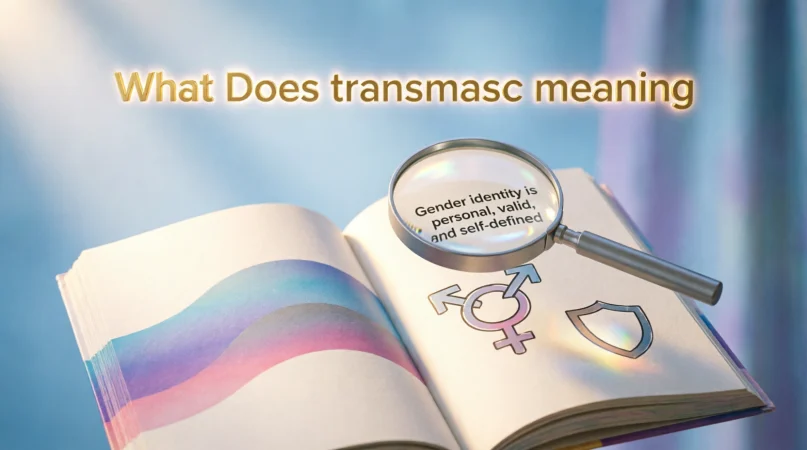
So, what does transmasc mean? Transmasc is a shortened form of transmasculine. It generally describes someone who identifies with masculinity or moves toward a more masculine gender expression while being transgender or having a gender experience different from the one they were assigned at birth.
The important thing to understand is that being transmasculine does not automatically mean someone is a transgender man. Some transmasculine people identify as men, while others identify as nonbinary, genderfluid, agender, or another gender identity. In everyday conversation, the word is usually used as a personal identity label. Someone might say, “I’m transmasc,” “My friend is transmasc,” or “This space is for transmasc people.”
This guide explains the meaning in simple terms, how the word is used in texts and social media, how it differs from related terms, and what to say if you are unsure how someone uses the label.
What Does Transmasc Mean?
Transmasc means transmasculine.
The word combines two ideas:
- Trans relates to being transgender or having a gender identity that differs from the sex or gender someone was assigned at birth.
- Masc is short for masculine.
Together, transmasc is a broad term for people whose gender identity or gender expression is connected to masculinity in some way and who generally have a transgender experience.
That definition is intentionally broad because people use the label differently.
For one person, being transmasc might mean identifying as a transgender man. For another, it might describe being nonbinary while feeling more comfortable with masculine presentation or social roles.
For example, someone might write:
“I’m transmasc and nonbinary.”
This does not mean the person is necessarily saying, “I am a man.” Instead, they may be explaining that their gender experience is connected to masculinity but does not fit completely within the category of “man.”
That distinction is one of the most important things to know about the term.
Transmasc Meaning in Text Messages
If you see transmasc in a text message, the meaning usually does not change.
Someone may use it simply as a shorter way of saying transmasculine.
For example:
“My brother is transmasc.”
or:
“I’m transmasc, so I’m looking for a support group.”
or:
“Are there any transmasc people here who have dealt with this?”
In these examples, the person is talking about gender identity or gender experience.
Unlike some internet slang, transmasc is not normally used as a joke, reaction, or expression such as “LOL” or “BRB.” It is an identity-related term.
If someone describes themselves this way, the safest approach is to take the label at face value and use the name and pronouns they have asked others to use.
Is Transmasc the Same as Transgender?
Not exactly.
Transmasc is a type of transgender-related identity or description, while transgender is a much broader umbrella term.
The word transgender can refer to many different gender experiences.
A person might be a transgender man, transgender woman, nonbinary person, or another gender identity that differs from the one assigned to them at birth.
Transmasc focuses specifically on a connection to masculinity.
Think of it this way:
Transgender is a broad category.
Transmasculine is a more specific term describing a person’s relationship with masculinity within that broader transgender experience.
However, people do not all use these categories in exactly the same way. Some people strongly identify as transgender, while others prefer more specific labels. Some use several labels at the same time.
For example, someone could describe themselves as:
- transgender
- transmasculine
- nonbinary
- transmasc nonbinary
- a trans man
The exact combination depends on the individual.
Does Transmasc Mean Transgender Man?
Not necessarily.
This is one of the most common misunderstandings.
A transgender man is someone who identifies as a man and was not assigned male at birth. A transmasculine person may be a transgender man, but the term can also include people who are not men.
For example, a nonbinary person might feel strongly connected to masculinity without identifying exclusively as male.
They may therefore prefer transmasc because it describes their experience more accurately.
Imagine someone saying:
“I’m not a man, but I feel much more comfortable presenting masculinely.”
That person might use the term transmasc.
Another person might say:
“I’m a trans man, and I also describe myself as transmasc.”
Both uses can be valid.
The key point is that transmasc describes a relationship with masculinity; it does not automatically tell you the person’s exact gender identity.
What Does “Masc” Mean?
The word masc is a casual abbreviation of masculine.
You may see it used in many contexts, including LGBTQ+ communities and social media.
For example:
- masc clothing
- masc presentation
- masc style
- masc energy
- transmasc
- masc-of-center
When someone describes themselves as masculine or masc, they may be talking about appearance, clothing, behavior, identity, or a combination of these.
However, masculinity itself does not belong exclusively to men.
Women can be masculine. Nonbinary people can be masculine. Men can be feminine. A person’s clothing or appearance does not automatically determine their gender.
That is why transmasc should not simply be interpreted as “a woman who dresses like a man.” Gender identity and gender expression are related concepts, but they are not the same thing.
What Is the Difference Between Transmasc and Transfem?
A useful comparison is transmasc and transfem.
Transmasc is short for transmasculine and generally refers to a transgender person whose identity or gender experience is connected with masculinity.
Transfem is short for transfeminine and generally refers to a transgender person whose identity or gender experience is connected with femininity.
For example:
“She is transfem.”
could describe someone whose gender journey is connected to femininity.
Meanwhile:
“He is transmasc.”
could describe someone whose gender journey is connected to masculinity.
These terms are broader than simply saying “trans man” or “trans woman.”
A transmasc person does not have to identify as a man, just as a transfem person does not necessarily have to identify as a woman.
Transmasc vs. Trans Man: What’s the Difference?
The distinction can be subtle, especially if you are new to gender terminology.
A trans man identifies as a man.
A transmasc person has a gender identity or experience that is connected to masculinity, but they may or may not identify as a man.
Some trans men use both terms because both describe them.
For example:
“I’m a trans man, and I consider myself transmasc.”
There is no contradiction there.
The broader label can be useful when someone wants to describe their experience without making a statement that they are exclusively male.
It can also be useful in communities where people have shared experiences related to masculinity, regardless of whether everyone in the group identifies as a man.
Can a Nonbinary Person Be Transmasc?
Yes.
A nonbinary person can identify as transmasc.
Nonbinary is an umbrella term for gender identities that are not exclusively male or female. There are many different nonbinary identities, and people within the nonbinary community can have very different relationships with masculinity and femininity.
For example, a person could identify as:
“transmasc nonbinary”
This might mean they are nonbinary and feel that their gender identity, presentation, transition, or overall experience is oriented toward masculinity.
It does not necessarily mean they want to be treated as a man.
This is why asking respectful questions can be more useful than making assumptions.
If someone tells you, “I’m transmasc and nonbinary,” you do not need to figure out what their identity “really” means. They have already given you the information they want you to have.
What Does Transmasc Mean on TikTok, Instagram, Reddit, or X?
On social media, transmasc is often used as a community label.
You may see it in:
- profile bios
- hashtags
- captions
- comments
- usernames
- community descriptions
- discussion forums
- dating profiles
- support groups
Someone might write:
“Transmasc here. Has anyone else experienced this?”
Or:
“Looking for transmasc creators to follow.”
Or:
“This is a transmasc-friendly space.”
In these situations, the term helps people quickly identify a particular community or topic.
Social media has also made shorter identity terms more common. Instead of repeatedly writing “transmasculine people,” someone might simply write “transmasc people.”
This makes conversations quicker and can also create a sense of shared community.
Examples of Transmasc Used in a Sentence
Here are some straightforward examples.
Example 1: Personal identity
“I’m transmasc and use he/they pronouns.”
The person is describing their gender experience and giving their preferred pronouns.
Example 2: Community
“This group is mainly for transmasc people.”
The group is intended for people who identify with the transmasculine umbrella.
Example 3: Social media
“I follow several transmasc creators.”
The speaker is referring to creators who identify as transmasculine.
Example 4: Nonbinary identity
“I’m transmasc nonbinary.”
The person identifies as nonbinary while also describing their gender experience as transmasculine.
Example 5: Transition discussion
“I’m looking for resources from other transmasc people.”
The person wants information or experiences from others with similar gender experiences.
In all of these examples, the meaning comes from the surrounding conversation.
Does Being Transmasc Mean Someone Is Transitioning?
No.
A person can identify as transmasc whether or not they are medically or socially transitioning.
Transition is personal. Different people make different choices, and there is no single checklist that someone has to complete before using a particular identity label.
Some people may change their clothing or hairstyle. Others may change their name or pronouns. Some may pursue medical care such as hormone therapy or surgery. Some may not want any medical changes at all.
Someone’s decision about transition does not determine whether their identity is legitimate.
It is also important not to assume that a transmasc person wants to discuss medical details.
Questions about someone’s body, medical history, hormones, surgery, or anatomy can be very personal. Unless they bring up the subject themselves, it is usually better to respect their privacy.
What Does Transmasc Mean for Appearance?
There is no single “transmasc look.”
Some people who identify as transmasc present in a traditionally masculine way. Others have a more androgynous style. Some may combine masculine and feminine clothing.
Someone’s appearance alone cannot tell you whether they are transmasc.
For instance, a person with short hair, loose clothing, and a traditionally masculine style might be transmasc, but they might also be cisgender, nonbinary, or another identity.
Likewise, a transmasc person may enjoy dresses, makeup, jewelry, or other traditionally feminine forms of expression.
Gender expression is not a perfect indicator of gender identity.
That is why the label should come from the person themselves rather than from someone observing them.
Why Do People Use the Word Transmasc?
There are several reasons someone might choose this term.
One is specificity.
The word transgender is broad. Saying transmasc can give people more information about someone’s relationship with gender without requiring a long explanation.
Another reason is community.
People may use the term to find others with similar experiences. A transmasc person might search for transmasc communities because they want conversations that relate specifically to their experiences.
The word can also provide flexibility.
Someone may know that their gender is connected to masculinity without feeling that “man” is the right or complete description.
In that situation, transmasc can be a useful umbrella term.
Is Transmasc a Gender Identity?
It can be used as an identity label, but it is often better understood as an umbrella or descriptive term rather than one single, universally defined gender identity.
Different people use it differently.
For some, “transmasc” is an important part of their identity. For others, it is simply a convenient way to describe their gender experience.
There is no requirement that everyone who uses the term define it in exactly the same way.
This is common with identity language. Words evolve as communities use them, and individuals may attach slightly different meanings to the same label.
When in doubt, let the person explain what the term means to them.
What Should You Say If Someone Tells You They Are Transmasc?
You generally do not need a complicated response.
If a friend says:
“I’m transmasc.”
you could simply say:
“Thanks for telling me.”
If they have also told you their pronouns, use those pronouns.
If you are unsure about someone’s pronouns, a polite question can help:
“What pronouns do you use?”
There is no need to interrogate someone about their identity.
You also do not need to immediately ask whether they are transitioning, what their assigned sex was, or whether they plan to have surgery.
Being respectful often means allowing someone to share information at their own pace.
What Not to Assume About a Transmasc Person
Understanding the term also means understanding what it does not tell you.
If someone says they are transmasc, you should not automatically assume:
- they identify as a man
- they use he/him pronouns
- they want hormone therapy
- they want surgery
- they have changed their name
- they present in a masculine way every day
- they dislike feminine clothing
- they were assigned female at birth, unless they have told you
- they want to discuss their body or transition
- they use the term in exactly the same way another transmasc person does
Identity labels provide useful information, but they do not tell you everything about a person.
Is Transmasc Offensive?
Transmasc is generally a neutral and commonly used term within LGBTQ+ communities.
However, context matters.
If someone uses the term for themselves, there is usually no issue with repeating it respectfully.
If someone has told you that they do not like being called transmasc, however, you should respect their preference.
Identity language is personal. A label that feels helpful to one person may not feel right to another.
It is also better to avoid using identity terms as insults, jokes, or stereotypes.
The same basic rule applies to many personal descriptors: use the language people use for themselves when possible.
Is “Transmasc” the Same as “FTM”?
Not necessarily.
FTM traditionally means “female-to-male” and has historically been used by some transgender men and transmasculine people.
However, not everyone who is transmasc identifies with FTM terminology.
Some nonbinary people, for example, may find that “FTM” does not accurately describe them because they do not identify as fully male.
Language has also changed over time. Many people prefer terms that focus on their current identity rather than describing gender as a simple transition from one category to another.
If you see FTM and transmasc used in the same conversation, do not automatically assume the two terms mean exactly the same thing.
Is Transmasc the Opposite of Transfem?
They can be thought of as related terms, but “opposite” may be too simplistic.
Transmasc generally points toward masculinity.
Transfem generally points toward femininity.
But gender is not always a simple male-versus-female spectrum.
People can have identities that are nonbinary, fluid, mixed, neutral, or difficult to describe using traditional categories.
The terms are best understood as broad descriptions rather than two boxes that everyone must fit into.
Why Do People Shorten Transmasculine to Transmasc?
The shorter form is convenient.
Online conversations often favor concise language, especially in usernames, bios, hashtags, group names, and quick messages.
Compare:
“I am looking for other transmasculine people.”
with:
“Looking for other transmasc people.”
The second version is shorter and easier to type.
It also works naturally with other informal abbreviations such as “masc” for masculine and “fem” for feminine.
This does not make the term meaningless or purely slang. It is simply a shortened form that has become widely recognizable in many LGBTQ+ online spaces.
Frequently Asked Questions About Transmasc
What is the simple meaning of transmasc?
Transmasc is short for transmasculine. It generally describes a transgender person whose gender identity or experience is connected with masculinity.
Does transmasc mean a person is a man?
No. Some transmasc people are men, but others are nonbinary or have another gender identity.
Can nonbinary people be transmasc?
Yes. A nonbinary person can identify as transmasc if the term describes their relationship with masculinity.
Is transmasc an abbreviation?
Yes. It is an informal shortened form of transmasculine.
What does transmasc mean in a bio?
If someone writes “transmasc” in their social media or dating profile, they are generally communicating that they identify with the transmasculine umbrella.
Is transmasc the same as transgender?
No. Transgender is a broader term. Transmasc is a more specific description related to masculinity.
Is a transmasc person automatically on testosterone?
No. Someone’s identity does not tell you whether they take testosterone or use any other form of medical transition.
Can a transmasc person use she/her pronouns?
Pronouns and gender identity are separate. People can use a wide range of pronouns, although you should use the pronouns an individual tells you they prefer.
Can a transmasc person dress femininely?
Yes. Gender identity does not dictate clothing. A transmasc person can dress in masculine, feminine, androgynous, or any other style.
What is the difference between transmasc and trans man?
A trans man identifies as a man. Transmasc is a broader term that can include trans men as well as some nonbinary people and others whose gender experience is connected with masculinity.
How to Understand Transmasc Without Overcomplicating It
If all of these definitions feel like a lot, there is a simple way to remember the basic idea.
Transmasc = transmasculine = a transgender-related identity or experience connected with masculinity.
The label can include people who identify as men, but it is not limited to men.
When you see the word in a text, comment, profile, or social media post, look at the context. In most cases, the person is simply describing their gender identity or their connection to masculinity.
There is no hidden internet code to decode.
And if a particular person’s use of the term seems different from what you have read elsewhere, that is not necessarily a contradiction. Personal identity labels can be broad, and people often choose the words that best describe their own experience.
Final Takeaway
So, what does transmasc mean? The short answer is that transmasc is a shortened form of transmasculine. It is generally used by or about transgender people whose gender identity, expression, or experience is connected with masculinity.
A transmasc person may be a transgender man, but they may also be nonbinary or have another gender identity. The word therefore should not automatically be treated as another way of saying “trans man.” On social media and in text messages, the term is usually straightforward. Someone may use it in a profile, conversation, support group, or post to describe their identity or find others with similar experiences.
The most important thing is to avoid assumptions. The word can tell you something about someone’s relationship with masculinity, but it does not tell you everything about their identity, pronouns, appearance, medical choices, or personal history. If someone uses transmasc to describe themselves, the simplest response is usually the best one: respect the label they have chosen, use the pronouns they give you, and let them decide how much more they want to share.
Discover more post
What Does athena name meaning Mean in Text? 2026
What Does lion tattoo meaning Mean in Text? 2026
What Does duality meaning Mean in Text? 2026

Ari is a passionate digital content creator, humor writer, and online storytelling expert behind MeanlyGuru.com. With years of experience in SEO writing, content strategy, and lifestyle blogging, Ari delivers relatable, engaging, and highly shareable content that resonates with readers worldwide.